
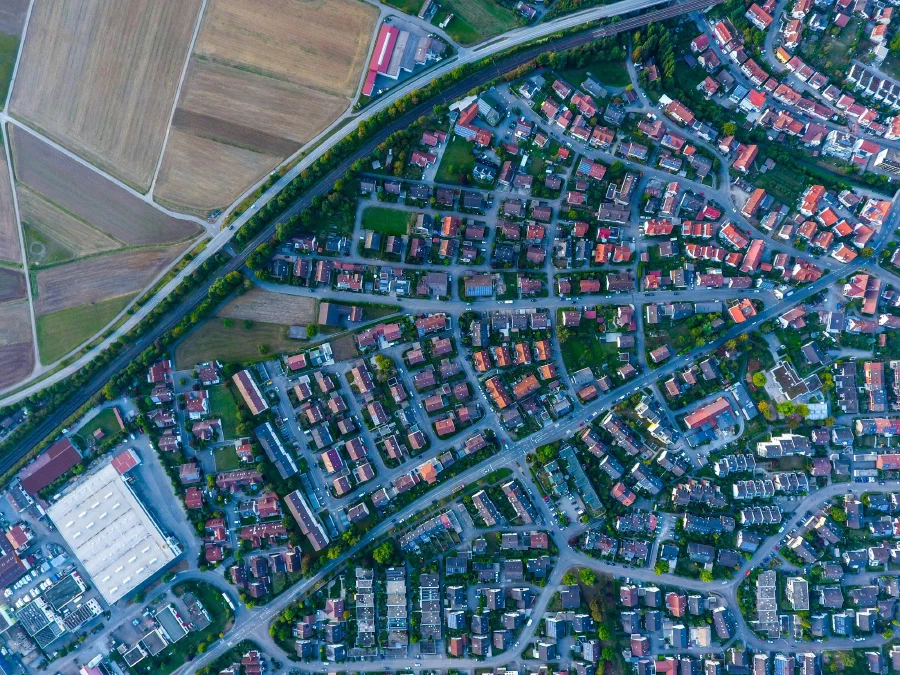
Comprehensive climate change & nature loss data analytics, informing risk mitigation strategies
Locate physical asset risks and develop mitigation strategies
GeoAI-powered insights unlock key risks and opportunities at the physical asset level—maximizing resilience and profitability. Comprehensive, location-based assessment, mitigation, monitoring, and forecasting are essential for operations, supply chains, site selection, and investment decisions. All of this is made possible through our Integrated Planetary Intelligence® platform, powered by advanced GeoAI.
Impacts of climate change and nature loss
Environmental risk is financial risk
“Just as investors assess the size and quality of the future cashflows of a business to determine value and investment attractiveness, policy makers, business executives and investment managers need to consider the quantity and quality of environmental assets and the future flow of ecosystem services on which society and business depend.
Despite the growing risks associated with accelerating nature loss, most companies, investors and lenders today do not understand their dependencies and impacts on nature and are inadequately accounting for nature-related risks and opportunities in their strategies and capital allocation decisions. This is a major risk management blind spot for companies and investors…”
Credit: Taskforce for Nature-related Financial Disclosures (TNFD)
Mitigation is required to protect shareholder value
“Stock and bond market prices generally reflect anticipated climate risks, but pricing can be incomplete or distorted. Anticipated policies to curb emissions can impact stock prices of emissions-intensive companies, and long-term bonds issued by municipalities exposed to future climate risks tend to have lower prices.
In the absence of strong global mitigation policies, some forward-looking financial institutions are preemptively responding to potential impacts by restructuring portfolios.”

Barry Glick, Co-Founder MapQuest (Acquired by AOL/Time-Warner), Principal NAVTEQ (Nokia), ALK (Trimble) & PTV (Porsche)
“Earth Knowledge is unparalleled in its ability to deliver scientifically validated, actionable data and insights globally. Their combination of a massively scaled modeling and analytics platform, comprehensive climate and nature forecasts and high spatial resolution, is unique. This is precisely what is so urgently needed for enterprises, governments, and financial institutions to fully understand their risk exposure and assure their future resilience and sustainability in this era of rapid and complex global change. ”
Physical climate and nature risks aren’t linear…they’re cascading
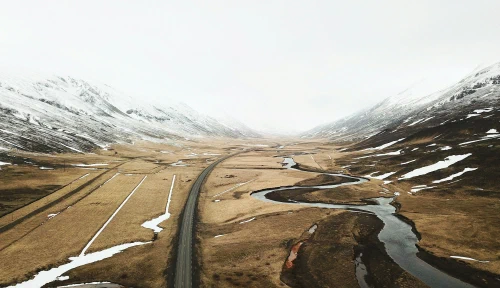
“Compound events often have cascading impacts that cause greater harm than individual events. For example, in 2020, record-breaking heat and widespread drought contributed to concurrent destructive wildfires across California, Oregon, and Washington, exposing millions to health hazards and straining firefighting resources.
Ongoing drought amplified the record-breaking Pacific Northwest heatwave of June 2021, which was made 2° to 4°F hotter by climate change. The heatwave led to more than 1,400 heat-related deaths, another severe wildfire season, mass die-offs of fishery species important to the region’s economy and Indigenous communities, and total damages exceeding $38.5 billion (in 2022 dollars).”
Credit: 5th U.S. National Climate Assessment
Use Earth Knowledge Twin indicators to identify physical climate & nature risks for:

Corporate Assets

Portfolios

Supply sheds & supply chain
Effective mitigation strategies require comprehensive data inputs
Spatial resolution
Earth Knowledge Twin delivers physical climate and nature risk identification with our 50+ indicators at a spatial resolution of 1km or better globally. That’s best-in-class.
Temporal resolution
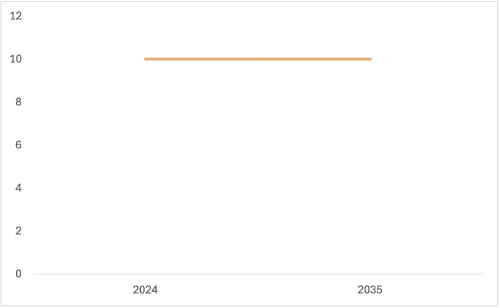
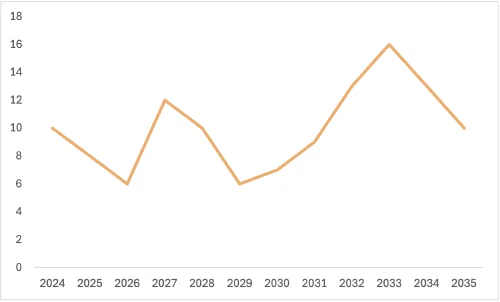
Spatial resolution is just one part of the climate and nature risk equation. As with economics, long term trends can’t prepare you for short-term volatility. At Earth Knowledge, we give you the whole picture with industry-leading temporal resolutions of decadal (data point per 10 years), annual (per year) and monthly (per month). Here’s an example of two different temporal resolutions with the same underlying data. The more timesteps, the better you can understand variability and ensure mitigation plans are adequate.
Decadal Resolution
Annual Resolution
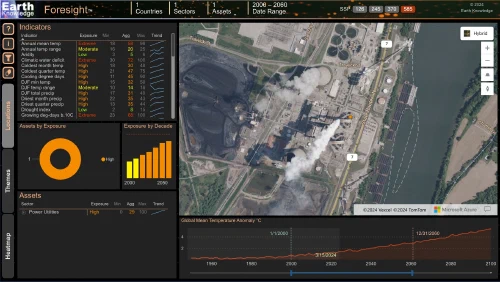
Earth Knowledge Twin for Risk Identification
Industry-leading resolution
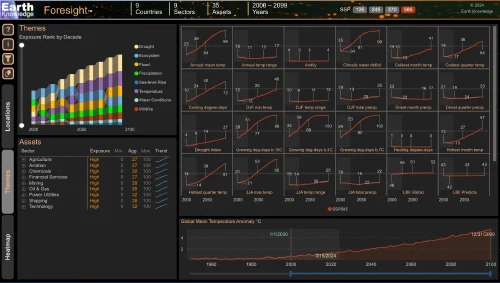
Visualize climate impact
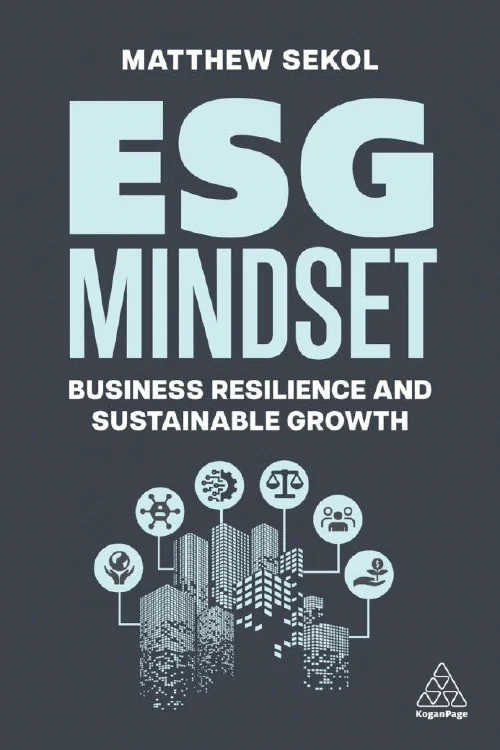
As featured in ESG Mindset by Matthew Sekol:
“In ESG Mindset, I develop a mindset for considering material ESG risks and opportunities for companies. In the chase for endless carbon emissions and mitigation, climate risk and adaptation are overlooked, and this is right where Earth Knowledge provides value through its highly detailed climate and nature forecasts pinpointing risks and opportunities, now and in the future. “
Comprehensive sector-specific insights with Earth Knowledge Twin
Construction: Drought & Water Availability
A cement manufacturing company might face challenges and cost increases with a rising drought index due to water being a critical component in the cement-making process. Water scarcity can lead to production delays or increased costs as water needs to be sourced from farther away. Additionally, drought conditions can lead to stricter water usage regulations, forcing the company to adopt more water-efficient technologies or processes, which could entail significant capital investments.
Energy & Utilities: Cooling Degree Days (CDD)
A rise in CDDs, typically during hotter and/or longer summers, leads to increased demand for air conditioning and cooling systems in homes and businesses. This surge in demand can strain the energy grid, requiring utility companies to ramp up production and possibly invest in additional infrastructure to meet peak loads. Higher CDDs can also lead to increased revenue due to higher electricity usage, but this is often accompanied by challenges like managing load distribution and maintaining infrastructure.
Conversely, a decrease in CDDs, indicating milder temperatures, results in lower demand for cooling. This can lead to reduced revenue for utility companies. However, it may also lower operational costs and lessen the strain on the energy grid. It gives these companies an opportunity to perform maintenance and upgrades without the pressure of high demand.
Pharmaceuticals / Bioprospecting: Species Richness
The pharmaceutical industry often relies on biological resources for drug discovery and development, a process known as bioprospecting. A decrease in species intactness can lead to the loss of genetic diversity and potentially valuable undiscovered compounds that could be used in new medications. This loss can limit opportunities for innovation and drug development, affecting the long-term sustainability and profitability of pharmaceutical companies.
Retail & Consumer Goods: Temperature of Hottest Month
A change in the temperature of the hottest month can significantly affect companies in the retail and consumer goods sectors. For example, if the temperature of the hottest month shifts to a period traditionally associated with lower temperatures, this could disrupt sales patterns for seasonal products. Companies might find themselves with excess inventory of summer products like air conditioners, swimwear, or cold beverages during a period when demand is unexpectedly low. This mismatch can lead to increased holding costs, markdowns, and reduced profit margins.
Conversely, there could be a shortfall in supply during the new hottest month, leading to lost sales opportunities. To adapt, companies might need to revise their product sourcing and inventory management strategies, potentially incurring additional costs and impacting the asset value of inventory and supply chain infrastructure.
Agriculture: Species Intactness
Declines in species intactness, particularly of pollinators like bees and butterflies, can directly impact agricultural productivity and crop yields. Many crops depend on insect pollination, so a reduction in pollinator populations can lead to decreased fruit, vegetable, and seed production, increasing costs and reducing income for farmers and agribusinesses. This can also lead to higher prices for consumers and potentially affect the global food supply.
Tourism: Wildfire Index
For businesses in the tourism and hospitality industry, such as hotels, resorts, and travel agencies, a high Wildfire Index can significantly impact operations. These businesses rely on the attractiveness and safety of their destinations to draw visitors. A high wildfire risk can deter tourists, leading to cancellations and reduced bookings. Additionally, these businesses must prioritize the safety of their guests, which can involve emergency preparedness plans, evacuation procedures, and constant monitoring of wildfire alerts.
In regions where tourism is highly seasonal, a high Wildfire Index during peak seasons can have a substantial financial impact. It can lead to a decrease in visitor numbers, affecting the revenue of businesses that depend on peak-season traffic. Furthermore, higher wildfire risks can increase insurance premiums for these businesses, adding to operational costs. It may also necessitate additional investments in fire prevention and safety measures to protect properties and ensure the safety of guests.
Our climate & nature partners







Learn more about how we can help you identify physical climate and nature risk
Our data solutions operate in concert with proven mitigation pathways provided by Earth Knowledge or our partner providers.
To start a conversation, or learn more please click below;